The Other Side of the Hospital Bed
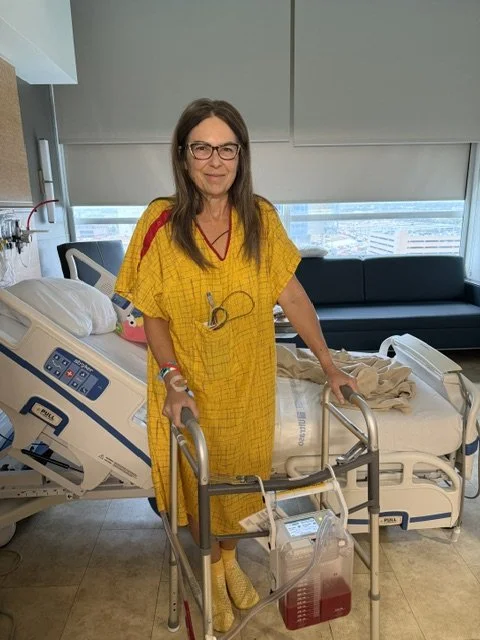
The Other Side of the Hospital Bed
Pain, Recovery, and the Importance of Having Someone by Your Side
I remember waking up in a haze.
OMG. My right shoulder hurt SO bad.
According to James, that was pretty much all I could focus on for hours. And whatever you did, don't even think about touching me!
The pain was intense. Not just uncomfortable, but the kind of pain that seems to take over every thought.
I'm not exactly sure what I expected after having part of my lung removed, but apparently, it wasn't this.
You would think that after more than 26 years of nursing, I would have had a better idea of what was coming.
Apparently not.
When the Nurse Becomes the Patient… Again
During my preoperative appointment, it was strongly suggested that someone stay overnight with me in the hospital.
That caught my attention.
These were words I had shared with patients, families, and friends countless times over the years. But now, hearing them directed at me felt different.
Gone are the days when patients could expect someone to be at their bedside every time they needed something.
Not because nurses and patient care technicians don't care. Quite the opposite. I've worked alongside some incredibly dedicated healthcare professionals.
But the reality is that hospital staff are often stretched thin, caring for more patients than any one person can comfortably manage.
And when you're recovering from major surgery, having someone nearby who knows you, can speak up for you, and can simply be present makes a difference.
I was incredibly thankful James stayed that first night.
Honestly, much of it is a blur.
I remember the pain. That darn shoulder. And the tube coming out of my side.
I know my daughter, Taylor, came to relieve James for a few hours, but I have absolutely no memory of her being there.
Sorry, Taylor!
That's how out of it I was.
When Breathing Becomes Frightening
Before surgery, the anesthesia team administered a chest wall nerve block to help manage postoperative pain.
I've assisted with nerve blocks during my nursing career, although never a chest wall block.
What I didn't receive was much explanation about what I might experience afterward.
Sometime in the wee hours of the morning, I began feeling heaviness in my chest. My shortness of breath increased.
And let me tell you, when you've just had lung surgery, feeling like you can't breathe comfortably is frightening.
The staff began moving quickly, assessing what was happening.
Eventually, the explanation given to me was that the nerve block was spreading and taking effect.
But I remember thinking something that has stayed with me.
Did the providers assume that because I was a nurse, I already knew what to expect?
Over the years, whenever I've assisted with procedures, I've tried to make sure patients understood what they might experience afterward.
Because knowing what to expect can make an enormous difference when something feels frightening.
And here I was, a nurse of more than two decades, wishing someone had explained a little more.
It was a reminder that even healthcare professionals need clear communication, reassurance, and an opportunity to ask questions.
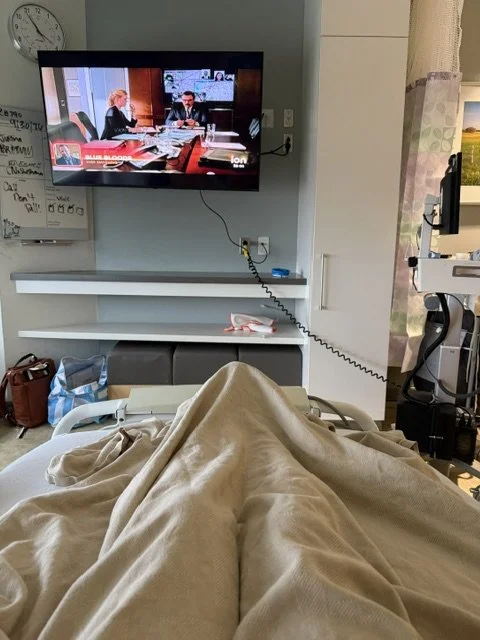
Trying to Be the Good Patient
I wanted this surgery to have the best possible outcome.
So I followed instructions.
I got up and hobbled around with my walker. I took my medications. I completed my breathing treatments and worked on expanding those lungs.
And I tried very hard not to complain.
I didn't want to be that patient.
You know the one. The patient who seems needy, who pushes the call button too often, or who needs just one more thing.
Funny how quickly we can put those expectations on ourselves.
Especially when we've spent our careers taking care of others.
Looking back, I realize that recovering from major surgery isn't the time to worry about being an inconvenience.
Needing help doesn't make someone a difficult patient. It makes them a patient.
The Difference Between Night One and Night Two
I was fortunate to receive really good care that first night.
The staff were attentive, and I was grateful.
But by the second night, my experience had changed considerably.
The level of care and attention wasn't the same.
And that's when I understood, from a very personal perspective, why I have encouraged families for years to have someone stay with their loved one whenever possible.
Not to replace the nurses.
Not to question every decision.
But to be another set of eyes and ears. Someone who can help remember information, notice changes, ask questions, and speak up when the patient may not be able to.
Because even when you're a nurse, there are moments when you simply cannot advocate for yourself.
And those moments matter.
A Rather Unusual Keepsake
Now, before surgery, I had one special request for my surgeon.
I wanted a photo of the portion of my lung that was being removed.
Yes, really.
Maybe that's the nurse in me, but after everything my lungs had put me through over the past several years, I wanted to see it.
My surgeon is a very serious man, so I wasn't quite sure how he would respond.
But when I asked to take a photo of his photo with my phone, I actually got a smile out of him.
A small moment of humor in an otherwise very serious experience.
And now I have a rather unusual keepsake.
Not exactly something you frame and hang over the fireplace!
But for me, it's a reminder of what my body has endured and, hopefully, what it is beginning to overcome.
A Different Perspective
After spending so many years on the caregiving side of healthcare, I thought I understood what patients experienced.
And in many ways, I did.
But lying in that hospital bed, struggling with pain, depending on others, and feeling vulnerable gave me a different perspective.
One that no nursing textbook or years of clinical experience could fully teach.
I was grateful for the care I received, thankful for my family, and reminded just how important communication and advocacy are during recovery.
And I was only beginning to understand what this next chapter would require of me.
To be continued…